Participatory Research on Climate Resilience in Cambodia (June–December 2025)
PROFESSIONAL ENGAGEMENT
Christine Ogolla
1/4/20262 min read
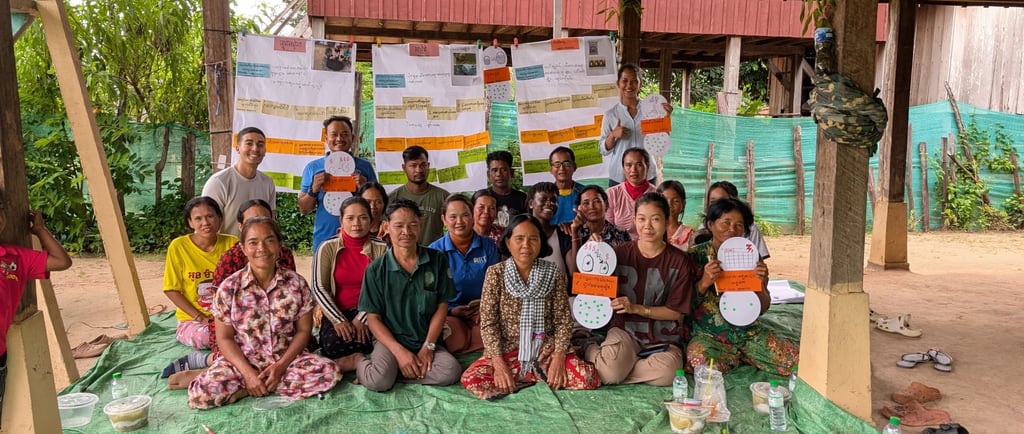
From June to December 2025, I was part of an interdisciplinary research team from the Centre for Rural Development (SLE) conducting participatory research in rural Cambodia, in four provinces (Kampong Thom, Kratie, Kampot, Tbong Khumum), under the EU-German CAPSAFE project implemented by GIZ Cambodia. Together with Cambodian co-researchers, we supported GIZ in better understanding how cashew and pepper farmers experienced climate change impacts and how they developed their own adaptation strategies.
Over five weeks of intensive fieldwork, we conducted three cycles of participatory farmer research, complemented by farmer interviews, field observations, and key informant interviews with actors along the cashew value chain, as part of the Kampong Thom team researching on cashew. This approach provided deep insights into farmers’ daily challenges, existing coping strategies, and their interest in specific climate-resilient practices to strengthen long-term adaptation. Fieldwork challenged me to build trust-based relationships with farmers as equal research partners and coordinate complex qualitative research processes under time pressure.
Alongside my research tasks, I took on responsibility for coordinating field activities with co-researchers and managing research budgets in the region, and ensuring smooth implementation under demanding conditions.
The main feature of this research was its highly collaborative nature. Working in a team of eight from Germany and a team of 8 co-researchers from Cambodia required understanding different perspectives, coordinating closely with the team, and balancing complex field responsibilities. Working in such a big and diverse team strengthened key skills in constructive conflict management and mediation, and giving and receiving critical, solution-oriented feedback.
Beyond fieldwork, I played a leading role in qualitative data analysis and contributed to the literature review, with a focus on barriers and enablers to the adoption of climate-resilient practices. This phase required structured thinking, teamwork, and the ability to guide collaborative analysis across a large, interdisciplinary research group.
The research journey concluded with consultative and validation workshops in Phnom Penh involving stakeholders from the Ministry of Agriculture, Forestry and Fisheries, FAO, universities, NGOs, and development partners. These discussions focused on climate risks, farmer preparedness, climate-resilient practices, value addition and market access, gender inclusion, and collaboration across institutions. The workshops marked an important step toward shaping inclusive and climate-resilient cashew and pepper value chains in Cambodia.
This experience was both challenging and deeply rewarding. It strengthened not only my understanding of climate resilience and agricultural value chains, but also my capacity to implement complex development research in intercultural, multi-stakeholder environments.
A sincere thank you to my team and Cambodian partners for their trust, collaboration, and commitment throughout this process.